Watch Planes Take Off and Land for Free in Las Vegas
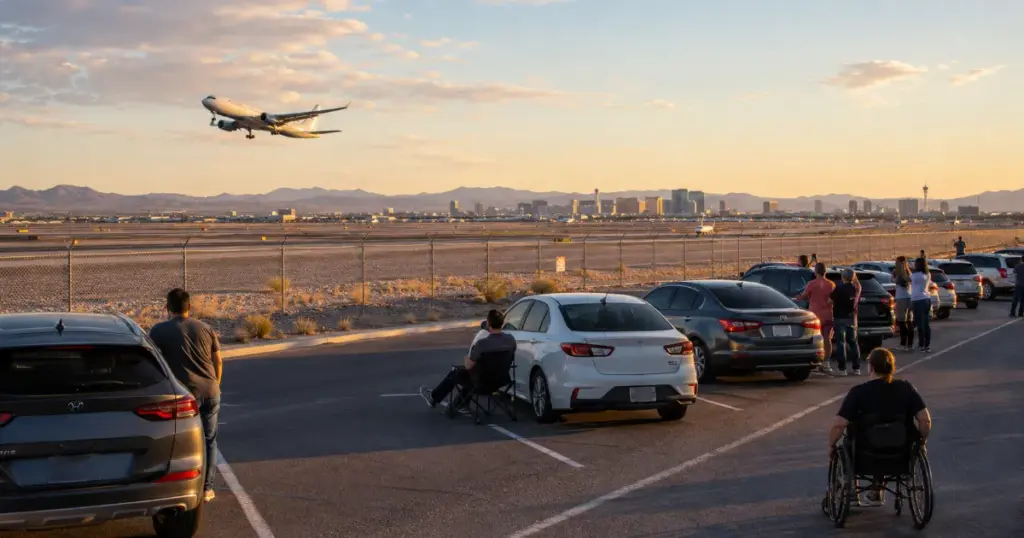
The Las Vegas Airport Runways Viewing Area is a free public plane-spotting location on Sunset Road beside Harry Reid International Airport. Visitors can watch commercial jets and other aircraft arrive, depart, taxi, and move around the airport.
Also known as the Sunset Viewing Area, this simple roadside stop is popular with aviation enthusiasts, photographers, families, locals, and visitors waiting for an airport pickup or looking for an unusual free activity near the Las Vegas Strip.
There is no admission charge or ordinary reservation requirement. However, access, parking, and viewing conditions remain subject to posted signs, airport operations, security needs, maintenance, weather, and temporary closures.
Visitors exploring more free things to do in Las Vegas can combine this short plane-watching stop with another nearby attraction or park.
Last reviewed: July 29, 2026. Access, parking rules, airport operations, viewing conditions, security restrictions, and temporary closures can change.
Quick Facts | What to Expect | Location | Best Time | Photography | Families | Airport Radio | Parking | Accessibility | Safety | Visitor Tips | FAQ
Las Vegas Airport Runways Viewing Area Quick Facts
Official Reference Name:
Sunset Viewing Area
Common Name:
Las Vegas Airport Runways Viewing Area
Location:
Sunset Road beside Harry Reid International Airport, between Paradise Road and Eastern Avenue
GPS Coordinates:
36°04’19.3″N 115°08’01.3″W
Admission:
Free
Reservations:
No ticket or ordinary reservation is required.
Parking:
A small public viewing lot is available. Spaces are limited, and access remains subject to posted airport rules and temporary restrictions.
Hours:
Follow current signs at the viewing lot. Access hours and closures may change because of airport operations, maintenance, security needs, or other conditions.
Restrooms:
No public restrooms are available in the viewing lot.
Shade:
The lot has little or no dependable shade.
Best For:
Plane spotting, aviation photography, supervised family visits, airport enthusiasts, and short free stops near Harry Reid International Airport
Important:
Remain inside the legal public viewing area. Do not approach, climb, touch, or interfere with the airport security fence.
What to Expect at the Runway Viewing Area
The Sunset Viewing Area provides a close public view of aircraft activity at Harry Reid International Airport. Depending on runway use, wind, weather, and flight operations, visitors may see passenger jets, cargo aircraft, private planes, helicopters, and airport service vehicles.
The experience changes throughout the day. At some times, aircraft may pass close to the viewing area. At others, most activity may occur on a more distant runway or in a direction that is harder to see.
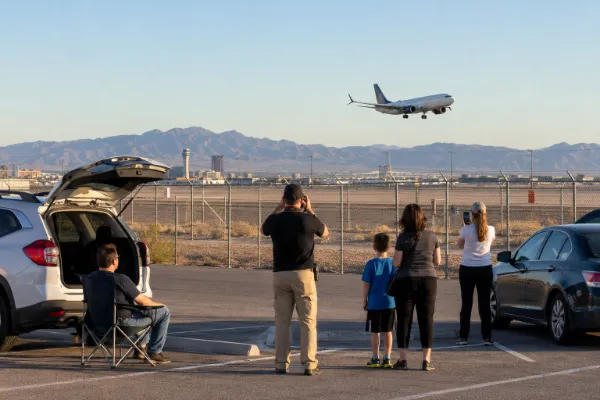
This is a basic paved parking and viewing area rather than a staffed attraction. There is no visitor center, observation tower, grandstand, permanent seating area, gift shop, playground, or public restroom.
Many visitors remain inside or beside their vehicles. Others bring binoculars, cameras, folding chairs, water, and sun protection for a longer visit.
How to Find the Sunset Viewing Area
The viewing area is along Sunset Road on the south side of Harry Reid International Airport. It is between Paradise Road and Eastern Avenue, west of Sunset Park and east of Las Vegas Boulevard.
The GPS coordinates are 36°04’19.3″N 115°08’01.3″W. Visitors may enter the coordinates into a navigation app, but they should follow current road signs and airport instructions when approaching the lot.
Do not confuse the viewing area with an airport terminal, passenger pickup area, rental-car facility, employee lot, service road, or secure airport entrance.
Drivers should approach carefully because Sunset Road carries regular traffic. Do not stop suddenly, reverse in a traffic lane, cross a median illegally, or wait on the shoulder for a parking space.
Best Time to Watch Planes
Aircraft activity depends on airline schedules, runway assignments, wind direction, weather, maintenance, and air-traffic-control decisions. No particular aircraft type, airline, runway direction, or traffic level is guaranteed.
Early morning, late afternoon, and evening are often more comfortable than midday during warmer months. The lot offers little dependable shade, and parked vehicles can become extremely hot.
Late-afternoon and evening light may also provide attractive conditions for photography. However, aircraft direction and the position of the sun can change the best camera angle.
Visitors making a special trip may wish to review current flight activity and weather before leaving home. Live flight information is only a planning tool because runway assignments can change without notice.
Plane-Spotting and Photography Tips
The viewing area can provide good opportunities to photograph arriving, departing, and taxiing aircraft. Results depend on aircraft position, runway direction, distance, heat distortion, lighting, weather, and camera equipment.
Visitors may use phones, binoculars, and ordinary personal cameras while remaining inside the public viewing area and following posted rules.
Do not position tripods, chairs, camera bags, or other equipment in vehicle lanes or parking entrances. Keep all equipment under control when wind is strong.
Do not use drones near the airport. Drone operations around an active airport are heavily restricted and can create serious aviation hazards.
Do not climb the security fence, place equipment against it, reach through it, or use a ladder or vehicle roof to gain height.
Commercial filming, organized media work, and professional production may require advance authorization from the airport.
Visiting with Children
The viewing area can be enjoyable for children who like airplanes. A short visit may work better than a long stay for younger children, especially during hot or windy weather.
Adults must supervise children closely. The viewing area is a working parking lot beside an active roadway and secure airport property.
Children should remain beside their supervising adults and away from moving vehicles, the lot entrance, Sunset Road, and the airport security fence.
Do not allow children to run between parked vehicles, climb on barriers, throw objects, touch the fence, or enter unauthorized areas.
Families should bring water, sun protection, and any supplies they may need because the lot does not provide restrooms, food service, or dependable shade.
Listening to Airport Radio Traffic
Some aviation enthusiasts listen to publicly available air-traffic radio feeds while watching aircraft. This can help listeners follow arrivals, departures, runway changes, and other airport activity.
Radio feeds may be delayed, temporarily unavailable, or difficult for first-time listeners to understand. They should be treated as an optional part of the visit.
Do not use radio information to enter restricted areas, interfere with airport operations, predict security activity, or disregard instructions from airport personnel or law enforcement.
Visitors should keep audio at a reasonable level and avoid disturbing other people in the viewing lot.
Parking at the Viewing Area
The Sunset Viewing Area has a small public parking lot. Parking is free unless current signs state otherwise.
Spaces can fill during popular plane-watching periods. If the lot is full, continue driving and return later rather than stopping in Sunset Road or blocking the lot entrance.
Park only in legal marked areas. Do not block traffic lanes, airport gates, fire access, service roads, accessible spaces, sidewalks, neighboring entrances, or other vehicles.
Oversized vehicles, trailers, buses, recreational vehicles, commercial vehicles, and organized groups may not fit safely or may be restricted.
Posted airport signs and instructions from security personnel, law enforcement, or airport employees take priority over information published online.
Accessibility
The viewing area is primarily a paved parking lot. Visitors can generally watch aircraft from inside or beside a vehicle without traveling through a large attraction.
However, there is no staffed accessibility desk, indoor waiting area, dependable shade, public restroom, or permanent seating.
Conditions may be difficult for visitors who are sensitive to heat, aircraft noise, vehicle exhaust, bright sun, wind, or prolonged standing.
Visitors who use mobility devices should remain on stable paved surfaces and avoid vehicle lanes, roadway shoulders, gravel edges, and areas near the security fence.
A companion may be helpful when parking is busy or when additional assistance is needed entering or leaving a vehicle.
Airport Viewing Safety and Rules
The viewing lot is next to an active international airport. Visitors must respect all fences, signs, barriers, road markings, security instructions, and temporary restrictions.
Remain in the public viewing area. Do not enter airport property, service roads, maintenance areas, construction zones, landscaped security areas, or other restricted locations.
Never point lasers, bright lights, or reflective devices toward aircraft. Aiming a laser at an aircraft is dangerous and illegal.
Do not fly drones, release balloons, throw objects, feed wildlife, use fireworks, or engage in any activity that could interfere with aircraft or airport operations.
Report suspicious or dangerous behavior to the appropriate authorities. Do not confront another visitor or attempt to enforce airport rules personally.
Leave immediately when directed by airport personnel, security officers, or law enforcement.
Tips Before Visiting
Check current access conditions.
The viewing area may close or operate under temporary restrictions because of airport activity, maintenance, security, or weather.
Visit during cooler hours.
Morning and evening are usually more comfortable during hot weather.
Bring water and sun protection.
The parking lot has little dependable shade and no public drinking fountain.
Use the restroom before arriving.
There are no public restrooms in the viewing lot.
Keep children close.
The site is a parking lot beside an active roadway and secure airport property.
Bring only manageable equipment.
Cameras, binoculars, and folding chairs should remain clear of traffic lanes and other parking spaces.
Do not depend on one runway direction.
Wind and airport operations determine where aircraft arrive and depart.
Leave when the lot is full.
Do not stop on Sunset Road, wait on the shoulder, or block the entrance.
Frequently Asked Questions
Q: Is the Las Vegas Airport Runways Viewing Area free?
A: Yes. There is no admission charge, and ordinary visits do not require a ticket or reservation.
Q: What is the official name of the viewing location?
A: Harry Reid International Airport refers to it as the Sunset Viewing Area.
Q: Where is the airport viewing area?
A: It is along Sunset Road beside the south side of Harry Reid International Airport, between Paradise Road and Eastern Avenue.
Q: What aircraft can visitors see?
A: Visitors may see commercial passenger jets, cargo aircraft, private planes, helicopters, and airport service activity. The view depends on current runway operations.
Q: Is parking free?
A: The public viewing lot is generally free to use unless current posted signs state otherwise. Spaces are limited.
Q: What hours is the viewing area open?
A: Visitors should follow the current signs at the lot. Access hours and closures may change because of airport operations, maintenance, security needs, or other conditions.
Q: Are restrooms available?
A: No public restrooms are available in the viewing lot.
Q: Is there shade?
A: There is little or no dependable shade. Visitors should prepare for direct sun and hot pavement.
Q: Is the viewing area good for children?
A: It can be enjoyable for children who like airplanes, but adults must supervise them closely because the site is a parking lot beside an active road and airport property.
Q: Can visitors take photographs?
A: Ordinary personal photography is generally suitable from the public viewing area. Commercial production may require airport authorization.
Q: Can visitors fly drones from the viewing area?
A: No. Visitors should not operate drones near the airport or from the viewing lot.
Q: Is the Las Vegas Strip visible?
A: Some distant resort or skyline elements may be visible from certain positions, but the primary view is the airport runway environment and aircraft activity.