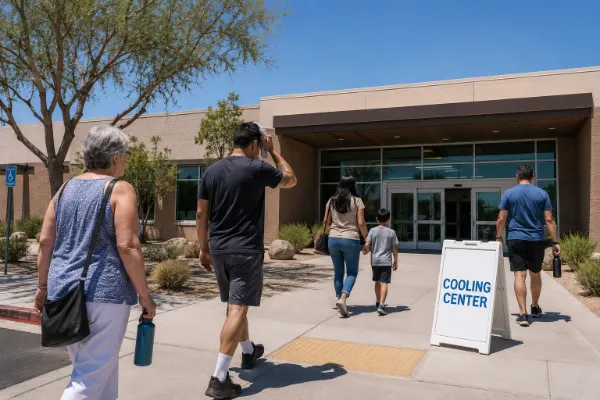
Find a Cool Place and Stay Safer During Extreme Las Vegas Heat
Las Vegas summer heat can become dangerous quickly. This guide helps you find current cooling stations and other heat-relief locations, understand transportation options, recognize heat illness, and protect yourself, your family, neighbors, and pets.
Cooling stations are not permanent year-round locations. Clark County activates daytime cooling stations during qualifying extreme-heat periods. Locations, dates, hours, and pet policies can change with each activation.
For the most current information, use the official Stay Cool Clark County resources instead of relying on an old list of cooling-center addresses.
Find Cooling Relief in Las Vegas Right Now
During periods of extreme heat, Clark County may activate daytime cooling stations at public facilities such as libraries, recreation centers, and community centers.
Cooling stations provide an air-conditioned place to get out of dangerous heat. Activated locations may also provide water or other hydration support.
Do not assume that a location used during a previous heat event is currently operating as a cooling station.
Check Current Clark County Cooling Station Status
Use Clark County’s official cooling-station page for the latest activation notices and current location information.
Check Current Clark County Cooling Stations
Clark County also posts time-sensitive announcements when cooling stations are activated during particular extreme-heat periods.
Tip: Check the current dates and hours before traveling to a location. Temporary cooling-station activations can end when the heat event ends.
Use the Stay Cool Clark County Heat Resource Map
The Stay Cool Clark County program provides a broader Southern Nevada Heat Resource Map that can help you find places to escape the heat.
The map may include:
- active cooling stations;
- public libraries;
- community facilities;
- public pools;
- splash pads;
- other heat-relief resources;
- and participating libraries that distribute heat-relief transportation passes.
This is more useful than a fixed list because operating hours, seasonal facilities, and cooling-station activations can change.
Cooling Station vs. Other Heat-Relief Locations
A formally activated cooling station is not the only place where someone may be able to get relief from the heat.
During normal operating hours, air-conditioned public facilities such as libraries and community centers may also provide a place to cool down. Pools and splash pads can offer additional seasonal relief, although their hours, admission rules, and availability vary.
Always check the individual facility before traveling.
Need Transportation to a Cooling Station?
Clark County’s Stay Cool program provides a transportation option for people affected by extreme heat who need help reaching cooling stations and do not have another way to get there.
Free 24-hour RTC bus passes may be available through participating libraries. Clark County states that the passes can be distributed even when a formal heat activation is not underway, with one pass available per visitor per visit.
The Stay Cool Clark County map identifies participating library locations.
Find Heat-Relief Transportation Resources
Important: Check the current map and participating location details before traveling specifically to obtain a pass.
Extreme Heat Safety at a Glance
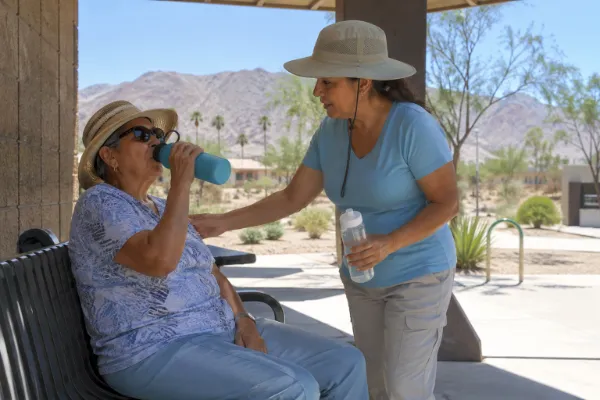
Extreme heat can affect anyone. Risk increases with prolonged exposure, strenuous activity, certain medical conditions, age, limited access to air conditioning, and other factors.
Stay Cool
- Spend as much time as possible in air-conditioned indoor spaces during extreme heat.
- If you must be outside, use shade and take frequent breaks.
- Move strenuous outdoor activities to cooler parts of the day when possible.
- Wear loose, lightweight, light-colored clothing.
- Use sunscreen and sun protection when outdoors.
- Take a cool shower or bath if you need help lowering your body temperature.
Stay Hydrated
- Drink fluids regularly throughout the day.
- Do not wait until you feel very thirsty before drinking.
- Carry water when traveling or spending time outside.
- Use extra caution with alcohol and beverages that may make hydration more difficult.
People who have medical conditions or have been told to limit fluids should follow their health care provider’s instructions.
Check on Other People
During prolonged heat, check on relatives, friends, and neighbors, especially people who live alone, do not have reliable air conditioning, or have health conditions that increase heat risk.
A phone call is helpful, but an in-person check may be more useful when someone is at high risk and it is safe to visit.
Know the Signs of Heat Exhaustion and Heat Stroke
Heat-related illness can develop when the body can no longer cool itself effectively. Symptoms can become serious quickly.
Heat Exhaustion
Possible signs include:
- heavy sweating;
- weakness or unusual fatigue;
- dizziness;
- headache;
- nausea;
- thirst;
- muscle cramps;
- fainting;
- or an elevated body temperature.
What to do: Move the person to a cool place, loosen unnecessary clothing, use cool wet cloths or other cooling methods, and offer frequent sips of cool water if the person is conscious and able to drink.
Seek medical help if symptoms get worse, do not improve, or you are concerned about the person’s condition.
Heat Stroke Is a Medical Emergency
Possible warning signs include:
- confusion or altered behavior;
- loss of consciousness;
- very high body temperature;
- hot skin that may be dry or sweaty;
- a fast, strong pulse;
- seizures;
- severe dizziness;
- or other signs that the person is rapidly becoming seriously ill.
If you suspect heat stroke, call 911 immediately.
While emergency help is coming:
- move the person to a cooler or shaded location;
- begin cooling them as quickly as possible with cool water, wet cloths, or other available cooling methods;
- remove unnecessary outer clothing;
- stay with the person;
- and do not give an unconscious or confused person anything to drink.
Who Is at Higher Risk During Extreme Heat?
Anyone can develop heat illness, but some people need extra protection during extreme temperatures.
Higher-risk groups can include:
- older adults;
- infants and young children;
- people with heart, lung, kidney, or other chronic health conditions;
- people taking medications that affect hydration or temperature regulation;
- people with limited mobility;
- people without reliable air conditioning;
- people experiencing homelessness;
- people working or exercising outdoors;
- pregnant people;
- and people who use certain substances.
Older Adults
Older adults may not adjust to sudden temperature changes as efficiently as younger people. Check indoor temperatures, make sure air conditioning is working, encourage regular fluids when medically appropriate, and arrange a cooler location if the home becomes too hot.
People with Disabilities or Medical Conditions
Some disabilities and health conditions can make it harder to recognize heat, move to a cooler location, obtain transportation, or regulate body temperature.
If you or someone you care for needs broader support, see our Las Vegas Disability Resources guide.
People Without Working Air Conditioning
Do not rely on remaining in an unsafe indoor space during prolonged extreme heat. Use the Stay Cool Clark County map to identify air-conditioned public facilities and cooling resources.
If utility costs are preventing you from keeping your home safely cooled, see our Las Vegas Rental & Utility Assistance guide.
Protect Children and Pets From Extreme Heat
Never Leave a Child or Pet in a Parked Vehicle
Vehicle interiors can reach deadly temperatures very quickly, even during a short stop.
Never leave a child, older adult who needs assistance, or pet unattended in a parked vehicle.
Children
Infants and young children depend on adults to keep them cool and hydrated. Limit strenuous outdoor activity during dangerous heat, provide frequent cooling breaks, and watch closely for changes in behavior or signs of illness.
Pets
Provide shade and fresh water, limit outdoor exercise during the hottest parts of the day, and remember that pavement can become dangerously hot.
When Clark County activates cooling stations, some locations may allow pets if they are properly leashed or contained. Pet policies vary by location, so check the current cooling-station information before arriving with an animal.
Working, Exercising or Spending Time Outdoors
Outdoor workers, athletes, hikers, visitors, and anyone performing strenuous activity face added risk during extreme heat.
- Schedule strenuous tasks for cooler parts of the day when possible.
- Take frequent rest breaks in shade or air conditioning.
- Drink water regularly.
- Wear loose, breathable clothing when appropriate for the activity.
- Monitor yourself and the people around you for heat-illness symptoms.
- Reduce intensity when conditions become dangerous.
Check the Weather Before You Go
Use the National Weather Service Las Vegas office for current forecasts, Extreme Heat Warnings, advisories, and other weather hazards.
National Weather Service Las Vegas
Remember: A familiar outdoor route can become much more dangerous during extreme heat. Do not use a normal summer routine as proof that conditions are safe today.
What to Do if the Power Goes Out During Extreme Heat
A power outage can turn an air-conditioned home into a dangerous environment during prolonged heat.
Check the NV Energy Outage Map
NV Energy’s Outage Center provides current outage information, including affected areas and available restoration information.
View Current NV Energy Outages
If Your Home Is Becoming Unsafe
If indoor temperatures are rising and you cannot stay safely cool, consider relocating early to an air-conditioned public space, cooling station, family member’s home, or other safe location instead of waiting until symptoms develop.
Use the Stay Cool Clark County map to find nearby heat-relief resources.
Downed Power Lines
Stay away from downed electrical lines and assume they are energized.
NV Energy advises reporting downed lines to 911 and NV Energy.
More Ways to Prepare for Las Vegas Heat
Keep a Basic Heat Plan
Before the next extreme-heat event:
- know where you can go if your air conditioning stops working;
- save the Stay Cool Clark County page on your phone;
- know how you would get to a cooling location;
- keep drinking water available;
- check that vulnerable relatives and neighbors have working cooling;
- keep phones and backup batteries charged;
- know where pets can safely go;
- and follow current National Weather Service warnings.
Reduce Home Cooling Costs
For practical ways to reduce energy and water use, see our Las Vegas Energy and Water Saving Tips.
If you are having difficulty paying electric, water, gas, rent, or other essential household expenses, see Las Vegas Rental & Utility Assistance.
Las Vegas Cooling Centers & Heat Safety FAQ
Q: Are Las Vegas cooling centers open all summer?
A: Not necessarily. Clark County activates formal daytime cooling stations during qualifying extreme-heat periods. Locations, dates, and hours can change with each activation.
Q: Where can I find cooling centers that are open right now?
A: Check Clark County’s official cooling-station information and the Stay Cool Clark County Heat Resource Map. Do not rely on a cooling-center list from an older heat event.
Q: What kinds of places are used as cooling stations?
A: Clark County has used recreation centers, libraries, community centers, and other public facilities during heat activations.
Q: Can I go to a library just to cool down?
A: Public libraries and other air-conditioned public facilities may provide heat relief during normal operating hours even when they are not formally designated as activated cooling stations. Check current hours before visiting.
Q: Is transportation available to cooling centers?
A: Clark County says free 24-hour RTC bus passes may be available through participating libraries for people affected by extreme heat who need transportation to a cooling station and do not have another transportation option. Use the Stay Cool Clark County map to find participating locations.
Q: Can I bring my pet to a cooling station?
A: Some activated Clark County locations may accommodate pets when they are leashed or in an appropriate carrier. Policies vary, so check the current location information before arriving with an animal.
Q: What are common signs of heat exhaustion?
A: Symptoms may include heavy sweating, weakness, dizziness, headache, nausea, thirst, muscle cramps, fainting, or an elevated body temperature. Move the person to a cool place and begin cooling them.
Q: What are warning signs of heat stroke?
A: Heat stroke can cause confusion, loss of consciousness, seizures, very high body temperature, hot skin, or other severe symptoms. Heat stroke is a medical emergency. Call 911 immediately and begin cooling the person while help is coming.
Q: Should I give water to someone with suspected heat stroke?
A: Do not give fluids to someone who is unconscious, confused, or unable to drink safely. Call 911 and begin rapid cooling.
Q: Who is most vulnerable to extreme Las Vegas heat?
A: Anyone can become ill from heat, but older adults, infants and young children, people with chronic medical conditions, people without reliable air conditioning, outdoor workers, people experiencing homelessness, and some people with disabilities face added risks.
Q: What should I do if my air conditioning stops working?
A: If your home is becoming dangerously hot, relocate early to an air-conditioned location rather than waiting until someone becomes sick. Check the Stay Cool Clark County map for cooling and heat-relief options.
Q: Where can I see current heat warnings for Las Vegas?
A: Check the National Weather Service Las Vegas office for current forecasts, Extreme Heat Warnings, advisories, and other weather information.
More Vegas4Locals Resources:
- Las Vegas Rental & Utility Assistance
- Las Vegas Disability Resources
- Las Vegas Energy and Water Saving Tips
- Vegas4Locals Community Resources
Accuracy note: Cooling-station activations, locations, hours, transportation assistance, pet policies, facility availability, and weather conditions can change quickly. Check Clark County, the Southern Nevada Health District, the National Weather Service, and individual facilities for current information.