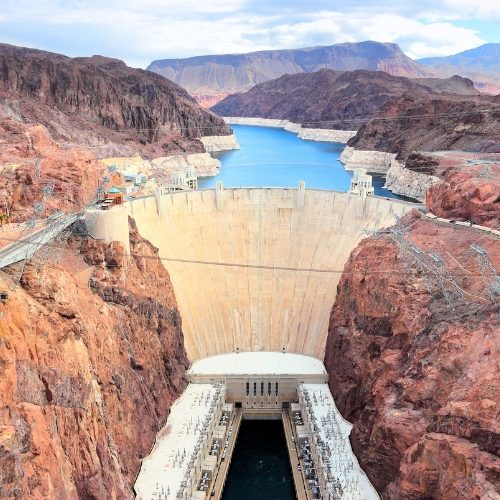
Walk Across an American Engineering Landmark for Free
Hoover Dam rises from Black Canyon on the Colorado River about 30 miles southeast of Las Vegas. Visitors can drive onto the dam property, walk across the top, photograph Lake Mead and the canyon, see the intake towers, and explore outdoor public areas without purchasing a tour ticket.
A self-guided outdoor visit is one of the most impressive free sightseeing experiences near Las Vegas. Parking and optional indoor attractions may cost extra, but there is no general admission charge merely to enter the dam property during public-access hours.
The free outdoor experience should not be confused with Hoover Dam’s paid Self-Guided Visitor Center Tour. The Visitor Center exhibits, indoor observation deck, Original Exhibit Building, Power Plant Tour, and Guided Dam Tour require tickets.
Last reviewed: July 12, 2026. Public hours, tour prices, parking, security procedures, vehicle restrictions, weather conditions, and tour availability can change.
Hoover Dam Quick Facts
- Outdoor Dam Access: Daily from 5:00 a.m. to 9:00 p.m.
- Visitor Center and Tours: Daily from 9:00 a.m. to 5:00 p.m., except Thanksgiving and Christmas Day.
- Visitor Center Doors Close: 4:15 p.m.
- Last Tour: 4:10 p.m.
- Free Experience: Driving onto the property, walking across the dam crest, seeing outdoor monuments, and taking ordinary visitor photographs.
- Visitor Center Admission: $15 per person; children age 3 and younger are free.
- Power Plant Tour: $25 for adults, $15 for ages 4–16, and free for children age 3 and younger.
- Guided Dam Tour: $40 per person; children age 3 and younger are free.
- Dam Tour Tickets: Sold only in person, on-site, on a first-come, first-served basis.
- Location: Colorado River at the Nevada-Arizona border, approximately 30 miles southeast of Las Vegas.
- Map Search: Hoover Dam does not have a conventional street address. Enter “Hoover Dam” in the navigation app.
- Phone: (702) 494-2517
- Height: 726 feet from foundation rock to the crest.
- Time Needed: About one to two hours for an outdoor visit or three to four hours when adding the Visitor Center and an interior tour.
- Best For: Engineering fans, history enthusiasts, families, photographers, road-trip travelers, and visitors exploring Boulder City or Lake Mead.
- Pets: Pets and comfort animals are not allowed on top of the dam or inside buildings. Trained service animals are welcome.
- Drones: Prohibited on Hoover Dam property.
- Important: Every vehicle is subject to inspection at the Nevada Security Checkpoint.
What Can You See at Hoover Dam for Free?
Walk Across the Dam
Pedestrians can walk along the top of Hoover Dam during public-access hours. The crest provides views of Lake Mead, the intake towers, Black Canyon, the Colorado River, and the powerplant structures below.
Cross the Nevada-Arizona State Line
The state boundary passes across the dam. Visitors can walk between Nevada and Arizona while remaining on the same structure.
See the Intake Towers
Four reinforced-concrete towers rise from Lake Mead on the upstream side. They regulate water entering the tunnels that supply the powerplant turbines.
View the Powerplants from Above
The Nevada and Arizona powerplant wings can be seen from the dam crest, although entering the generating facilities requires a paid guided tour.
Visit Monument Plaza
Outdoor displays include the Winged Figures of the Republic, memorials, plaques, Art Deco details, and historic architectural features.
Photograph Lake Mead and Black Canyon
The contrast between the massive concrete structure, reservoir, canyon walls, intake towers, and power facilities creates several distinctive viewpoints.
Drive Across the Dam
Most passenger vehicles may cross the dam after inspection. The road does not continue as a through route into Arizona, so drivers must return to Nevada to rejoin the highway.
No ticket is required for these outdoor activities. Parking, indoor exhibits, guided tours, food, souvenirs, transportation, and commercial tour packages cost extra.
Outdoor Highlights for a Self-Guided Walk
Lake Mead Side
Look upstream toward Lake Mead and the four intake towers. Visible shoreline marks can illustrate how reservoir levels have changed over time.
Colorado River Side
Look downstream into Black Canyon toward the river, powerplant structures, transmission equipment, and the Mike O’Callaghan–Pat Tillman Memorial Bridge.
Art Deco Architecture
Architect Gordon B. Kaufmann helped give Hoover Dam its distinctive monumental appearance. Look for geometric railings, clocks, lettering, elevator towers, terrazzo details, and sculptural elements.
Winged Figures of the Republic
Oskar J.W. Hansen designed the large bronze figures at Monument Plaza. The plaza also incorporates astronomical and historical symbolism connected with the dam’s dedication.
State-Line Markers
Signs and pavement markings identify the Nevada-Arizona boundary.
Mike O’Callaghan–Pat Tillman Memorial Bridge
The pedestrian walkway on the nearby bridge provides one of the best elevated views of Hoover Dam. It has separate access and parking from the main Visitor Center area. Review the Hoover Dam Bypass Bridge visitor guide before adding it to the trip.

Current Paid Hoover Dam Tour Options
Self-Guided Visitor Center Tour
Current Price:
$15 per person. Children age 3 and younger are free.
Includes:
The remodeled narrated exhibits, the paid Visitor Center observation deck, and the Original Exhibit Building with its regional dam-and-power-system model.
This ticket does not include entry into the powerplant or inspection tunnels.
Guided Power Plant Tour
Current Price:
$25 for adults, $15 for children ages 4–16, and free for children age 3 and younger.
Includes:
Original construction tunnels, a viewing platform overlooking a 30-foot-diameter penstock, eight commercial generators in the Nevada Powerhouse, and the Visitor Center package.
Power Plant Tour tickets can be purchased online, subject to availability. The official site identifies 9:00–11:00 a.m. and 2:30–3:45 p.m. as generally less-busy periods.
Guided Dam Tour
Current Price:
$40 per person. Children age 3 and younger are free.
Includes:
The Power Plant Tour plus historic tour tunnels, the original elevator, inspection tunnels within the dam, and a view of the Colorado River through an inspection ventilation shaft.
Dam Tour tickets cannot be purchased online. They are sold on-site only, and the entire group must be present. These tours regularly sell out, so early arrival is recommended.
Tour prices and contents can change. America the Beautiful and other interagency recreation passes are not accepted for Hoover Dam Visitor Center admission or tours.
Explore the Remodeled Hoover Dam Visitor Center
The Visitor Center’s exhibit level underwent a major renovation and reopened with new interactive displays.
Current exhibits use historical voices, sound, touch, recreated environments, models, and hands-on activities to explain why the dam was built, how workers lived, how construction progressed, and how the powerplant operates.
Features include a recreated construction-camp shack, jackhammer and dynamite effects, a 17-foot model revealing internal dam systems, and an interactive generator display.
The Visitor Center observation deck offers broad views of Hoover Dam, Lake Mead, the Colorado River, and the bypass bridge. Access to that deck is included with the $15 Visitor Center ticket and the guided-tour packages; it is not part of the free outdoor visit.
Visitors must complete security screening before purchasing tickets or entering the Visitor Center.
Security Rules Before Entering Hoover Dam
Vehicle Inspection
All vehicles are subject to inspection at the Nevada Security Checkpoint. Drivers may be asked to open the trunk, hood, storage compartments, trailer areas, or other parts of the vehicle.
No Stopping on the Dam
Vehicles may not stop, load passengers, or unload passengers on top of Hoover Dam. Use designated parking lots.
Restricted Vehicles
Semi-trucks and box trailers of any size are prohibited. Open trailers, campers, recreational vehicles, and pop-up campers are subject to additional inspection and parking restrictions.
No Firearms
Firearms, explosives, and fireworks are prohibited throughout Hoover Dam property.
No Marijuana
Marijuana is prohibited on Hoover Dam property, regardless of Nevada or Arizona state laws.
No Drones
Launching or flying a drone on Hoover Dam property is prohibited.
No Knives in Buildings
Weapons and knives of every size, including pocketknives, are prohibited inside the Visitor Center, tour areas, Original Exhibit Building, and other Hoover Dam buildings.
Visitor Center Screening
Guests must remove metal items from their pockets. Security personnel inspect personal belongings and use a handheld metal-detection wand or an alternative pat-down procedure.
Food and Drinks
Bottled water is permitted. Sealed food and beverages may be carried into the screening area but cannot be consumed inside Hoover Dam buildings.
Visitors who decline required screening or vehicle inspection will not be permitted beyond the checkpoint.
Hoover Dam Parking Options
Nevada Parking Garage
The parking garage beside the Visitor Center currently costs $10 per vehicle. It provides the shortest standard route to the tour entrance, plaza, and dam crest.
Arizona Lot 9
Lot 9 currently costs $10 per vehicle. Oversized vehicles, recreational vehicles, and vehicles towing approved trailers must use designated Arizona-side parking.
Arizona Lots 13 and 14
The Bureau of Reclamation currently identifies Lots 13 and 14 as no-charge parking areas. Follow all signs, vehicle restrictions, capacity limits, and staff directions.
Bridge Parking
The Mike O’Callaghan–Pat Tillman Memorial Bridge pedestrian walkway has separate access from the Hoover Dam Visitor Center. Do not assume one parking space is convenient for every viewpoint.
No Roadside Parking
Do not stop on the dam, access road, highway shoulders, security approaches, or unauthorized pullouts.
Parking prices and lot availability can change. Summer weekends, holidays, tour-bus arrivals, construction, and security activity can create delays.
Driving Directions from Las Vegas
Hoover Dam does not have a standard postal street address. Enter “Hoover Dam” in the navigation app rather than relying on an old address or map pin.
Current Route from Las Vegas
Travel south on I-11/US-93/US-95 through Boulder City. Take Exit 2, use the traffic circle to reach Nevada State Route 172, and follow Hoover Dam Access Road.
Security Checkpoint
All visitor vehicles approach the dam through the Nevada checkpoint. Allow extra time for inspection, especially during holidays and busy travel periods.
Not a Through Route
Vehicles may cross the dam to reach Arizona-side parking, but the old roadway does not continue to I-11 in Arizona. Drivers must return across the dam to Nevada and use I-11 over the memorial bridge to continue toward Arizona.
Travel Time
Hoover Dam is approximately 30 miles from Las Vegas. The drive can take considerably longer than 30 minutes depending on the starting point, Boulder City traffic, road construction, parking, and security screening.
Rideshare and Taxis
A one-way ride may be available, but return transportation and cellular service should be arranged carefully. Drivers cannot stop on the dam itself and must use approved loading areas.
Commercial Tours
Motorcoach and small-group trips can simplify transportation for visitors without a vehicle. Tour admission, itinerary, meals, bridge stops, and hotel pickup vary by operator.
Accessibility and Mobility Information
The Self-Guided Visitor Center Tour and Power Plant Tour are designed to accommodate wheelchairs, mobility scooters, and strollers.
The Guided Dam Tour has additional limitations. Motorized wheelchairs and strollers are not permitted on that tour, and the ventilation-shaft portion is not accessible to manually operated wheelchairs.
Wheelchairs are currently available to rent at the Nevada parking garage for $5, subject to availability.
Sign-language interpretation for guided tours can be requested at least 14 days in advance, excluding holidays. Tour scripts are also available on request.
The outdoor visit includes slopes, exposed pavement, distances between parking and viewpoints, security areas, curbs, crowds, and extreme temperatures. Contact Hoover Dam before visiting when a particular accommodation is essential.
Adults with children should note that stroller parking is available on the plaza, but strollers may not be permitted in every interior-tour area.
Tips for a Safer and More Comfortable Visit
Arrive Early
Morning generally provides cooler temperatures, smaller crowds, easier parking, and a better chance of securing a Guided Dam Tour ticket.
Carry Water
Much of the free experience is outdoors. Summer temperatures can exceed 100°F, and reflected heat from concrete and pavement can be intense.
Wear Comfortable Shoes
Expect considerable walking between parking, security, the plaza, the dam crest, and viewpoints.
Use Sun Protection
Wear sunscreen, sunglasses, a hat, and lightweight weather-appropriate clothing. Shade is limited on the dam.
Check the Vehicle Before Leaving Las Vegas
Remove firearms, fireworks, marijuana, prohibited trailers, and other restricted items before approaching the security checkpoint.
Do Not Leave Animals in the Vehicle
Pets cannot be taken onto the dam or into buildings and cannot be left unattended in parked vehicles.
Protect Phones and Cameras
Wind can be strong along the crest and bridge. Use straps and keep equipment away from railings.
Stay Behind Barriers
Do not climb walls, sit on railings, enter restricted stairways, or cross operational areas for a photograph.
Plan for Heights and Enclosed Spaces
Interior tours use elevators and construction tunnels. The bridge walkway and dam viewpoints may be uncomfortable for visitors with a fear of heights.
Check Current Conditions
Tours can be canceled without advance notice because of maintenance, security, staffing, or operational conditions.
Why Hoover Dam Remains an Engineering Landmark
Hoover Dam was built during the Great Depression to control floods, store Colorado River water, support regional development, and generate hydroelectric power.
The structure rises 726 feet above its foundation and is approximately 660 feet thick at its base. The dam itself contains about 3.25 million cubic yards of concrete, while the dam, powerplant, and related works contain approximately 4.36 million cubic yards.
The first concrete was placed on June 6, 1933, and the last major concrete placement occurred on May 29, 1935. Workers built the dam in interlocking concrete blocks and circulated chilled water through hundreds of miles of embedded pipe to remove heat as the concrete cured.
Construction created Lake Mead upstream and transformed water and power development throughout the Southwest.
The project’s Art Deco architecture, monumental sculpture, engineering scale, construction history, and continuing role in Colorado River management make it more than a roadside viewpoint.
Older claims that Hoover Dam holds one specific ranking among the world’s largest dams are not especially useful because rankings depend on height, volume, reservoir capacity, generation, and other measurements. Its importance is better understood through its engineering, history, and ongoing operation.
Video Preview of Hoover Dam
This video provides an example of the dam, Lake Mead, canyon views, and visitor environment. Reservoir levels, parking, exhibits, tour access, road conditions, and security procedures may have changed since filming.
Hoover Dam FAQ
Q: Is Hoover Dam free to visit?
A: Yes. Entering the property, walking across the dam, viewing outdoor monuments, and taking ordinary photographs are free. Parking and indoor attractions may cost extra.
Q: What are Hoover Dam’s current public hours?
A: The outdoor dam property is currently open daily from 5:00 a.m. to 9:00 p.m.
Q: What are the Visitor Center hours?
A: The Visitor Center and tours operate from 9:00 a.m. to 5:00 p.m. daily except Thanksgiving and Christmas Day. Doors close at 4:15 p.m.
Q: Is the Visitor Center observation deck free?
A: No. The observation deck is included with the paid $15 Self-Guided Visitor Center Tour and with the guided-tour packages.
Q: How much does the Visitor Center cost?
A: Current admission is $15 per person, with free admission for children age 3 and younger.
Q: How much is the Power Plant Tour?
A: Current prices are $25 for adults, $15 for ages 4–16, and free for children age 3 and younger.
Q: How much is the Guided Dam Tour?
A: The current price is $40 per person, with children age 3 and younger admitted free.
Q: Can Guided Dam Tour tickets be purchased online?
A: No. Guided Dam Tour tickets are sold only in person at Hoover Dam on a first-come, first-served basis.
Q: Is parking free?
A: The Nevada garage and Arizona Lot 9 currently cost $10. Arizona Lots 13 and 14 are currently identified as no-charge lots, subject to availability and vehicle restrictions.
Q: Can visitors drive across Hoover Dam?
A: Most passenger vehicles can cross after inspection, but the road is not a through route to Arizona. Drivers must return to Nevada to rejoin I-11.
Q: Can vehicles stop on top of the dam?
A: No. Stopping, loading, and unloading passengers on the dam are prohibited.
Q: Are vehicles searched?
A: All vehicles are subject to inspection at the Nevada Security Checkpoint. Drivers may be asked to open compartments, the trunk, or the hood.
Q: Are firearms allowed?
A: No. Firearms, explosives, and fireworks are prohibited throughout Hoover Dam property.
Q: Are pocketknives allowed?
A: Knives of every size, including pocketknives, are prohibited inside Hoover Dam buildings and tour areas.
Q: Are drones allowed?
A: No. Drone operations are prohibited on Hoover Dam property.
Q: Are pets allowed?
A: Pets and comfort animals are not permitted on top of the dam or inside buildings. Trained service animals are welcome.
Q: How far is Hoover Dam from Las Vegas?
A: Hoover Dam is approximately 30 miles southeast of Las Vegas. Actual travel time depends on the starting point, traffic, parking, and security screening.
Q: What should visitors bring during summer?
A: Bring water, sunscreen, a hat, sunglasses, comfortable shoes, and clothing suitable for extreme desert heat.