Need a smog check in Las Vegas, Henderson, North Las Vegas, or Summerlin? This guide explains Nevada’s current emissions-testing rules, how to find a licensed station, what a test may cost, and what to do if your vehicle fails or is rejected.
Fast answer: Most qualifying gasoline, hybrid, and light-duty diesel vehicles based in the Las Vegas Valley need an emissions test every year. New vehicles are exempt for their first three registrations, while new hybrids are exempt for their first five model years.
Who Needs a Nevada Smog Check?
A vehicle generally needs an annual emissions test when all applicable conditions below are met:
- It is based in the designated urban emissions-testing area of Clark County.
- It is a 1968 model year or newer.
- It is gasoline-powered, regardless of weight, or diesel-powered with a manufacturer’s gross vehicle weight rating of 14,000 pounds or less.
- It is not covered by a new-vehicle, hybrid, geographic, fuel-type, classic-vehicle, or other statutory exemption.
Testing is required throughout the Las Vegas Valley and in the surrounding testing buffer. Some outlying Clark County communities are exempt. If you are unsure whether your address is inside the testing area, call the Las Vegas DMV Emission Lab at (702) 486-4981.
Vehicles That Are Generally Exempt
- New vehicles during their first three registrations; testing begins with the fourth registration
- New hybrid-electric vehicles during their first five model years; testing begins in the sixth model year
- Vehicles from model year 1967 or earlier
- Motorcycles and mopeds
- Battery-electric vehicles
- Vehicles permanently powered by propane, compressed natural gas, methane, or butane
- Diesel vehicles with a manufacturer’s GVWR of 14,001 pounds or more
- Vehicles based outside Nevada’s designated emissions-testing areas
- Qualifying Classic Vehicle, Classic Rod, Old Timer, and Replica vehicles that meet the DMV’s plate, insurance, mileage, and annual-documentation rules
Exemptions have conditions. Review the Nevada DMV Emission Control Program before relying on one.
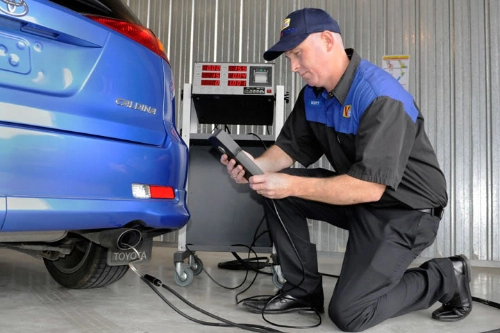
2026 Maximum Smog Check Fees in Clark County
Stations set their own prices up to the Nevada DMV’s annual maximum. Specials and coupons may reduce the price. Every licensed station must post its fees.
| Vehicle Class | Inspection | Certificate | 2026 Maximum Total |
|---|---|---|---|
| Light-duty gasoline, up to 8,500 lbs. | $68.50 | $7.00 | $75.50 |
| Heavy-duty gasoline, 8,501 lbs. or more | $68.00 | $7.00 | $75.00 |
| Diesel, up to 14,000 lbs. | $83.00 | $7.00 | $90.00 |
These are legal maximums, not typical advertised prices. A station that processes a registration renewal may charge up to $10 more for that service. Confirm the complete price before testing.
Convenient Las Vegas Smog Check Options
Smog Busters
Smog Busters lists 32 locations across Las Vegas, Henderson, and North Las Vegas. Its network includes testing-only stations, 2G testing-and-repair stations, diesel-testing locations, and selected DMV-service sites. Services vary by address.
- Locations: View all Smog Busters locations
- Phone: (702) 436-5346
- General hours: Monday–Friday, 8:00 a.m.–6:00 p.m.; Saturday, 8:00 a.m.–4:00 p.m.; closed Sunday
Confirm the location’s hours and whether it tests your vehicle type before visiting.
Smog Hut
Smog Hut operates locations near Lake Mead and Decatur and on East Cheyenne Avenue. Available services include gasoline and diesel testing, selected heavy-duty testing, registration services, repairs, and fleet services, depending on the location.
- Smog Hut I: 1975 N. Decatur Blvd., Las Vegas, NV 89108 (Map It) — (702) 647-1492
- Smog Hut II: 1950 N. Decatur Blvd., Las Vegas, NV 89108 (Map It) — (702) 210-0194
- Smog Hut North: 2218 E. Cheyenne Ave., North Las Vegas, NV 89030 (Map It) — (702) 399-3900
Hours and services can change. Call the specific station first, especially for diesel, all-wheel-drive, heavy-duty, repair, or registration services.
Search Every Nevada-Licensed Station
For the most complete current list, use the DMV’s licensed emission-station search. It can identify testing stations, 2G repair stations, diesel stations, and locations that offer registration renewals.
How to Prepare for a Smog Check
- Check the warning lights. A flashing check-engine light can indicate a serious problem; stop driving safely and arrange service. Nevada DMV advises owners with a steady light to complete the test because an official failure may be necessary for the waiver process.
- Tighten the gas cap. A loose or damaged cap can trigger an emissions-system fault.
- Do not test immediately after disconnecting the battery. On 1996-and-newer vehicles, the OBD system may need varied driving for up to a week to complete its readiness monitors.
- Make sure the vehicle is safe to test. Fix obvious exhaust leaks, overheating, severe misfires, or visible smoke first.
- Bring your renewal notice if you want registration service. Ask whether that station processes renewals and which payment methods it accepts.
A last-minute oil change, premium fuel, fuel additive, or coolant top-off does not guarantee a passing result. The test evaluates the emissions-control system, not a general maintenance checklist.
What Happens During the Test?
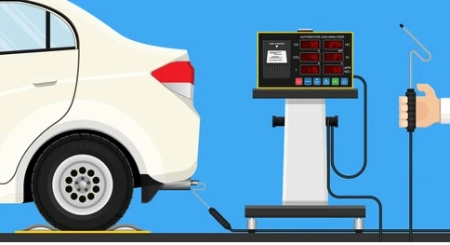
For most gasoline vehicles from 1996 onward, the inspector connects approved equipment to the vehicle’s OBD-II system. The test checks emissions-system status, diagnostic trouble codes, the malfunction indicator lamp, and readiness monitors. Older vehicles and certain heavy-duty vehicles may receive a tailpipe test. Diesel procedures differ by vehicle configuration.
The station transmits the result electronically to the Nevada DMV and provides a Vehicle Inspection Report. A passing result is generally valid for 90 days. A test provided with a Nevada dealer sale is valid for 180 days.
If Your Vehicle Fails or Is Rejected
Failed Test
Use the Vehicle Inspection Report to identify the failure, then obtain appropriate repairs and a retest. If you may need a DMV waiver, review the waiver rules before choosing a repair shop or buying parts. The station type, repair documentation, timing, and qualifying expenses can affect eligibility.
A one-year waiver may be available only after an initial failure, qualifying repairs, and another failed test. Waivers are not available for vehicles that emit visible smoke, have tampered emissions equipment, or qualify for warranty-covered repairs. See the DMV’s current failure and waiver requirements or call (702) 486-4981.
Rejected Test
“Rejected” does not mean the vehicle failed. It often means the OBD readiness monitors have not completed after a battery replacement, disconnection, code clearing, or recent repair. Drive under varied conditions as recommended by the manufacturer, then return for testing. Do not repeatedly clear codes.
Expired Registration
If the registration is expired or about to expire, request a Nevada DMV movement permit before driving the vehicle on public roads.
Smog Free Clark County Repair Assistance
Qualifying Clark County residents with eligible older vehicles may receive up to $975 toward emissions-related repairs through Smog Free Clark County. Vehicle model-year, failed-test, income, ownership, registration, and program-capacity rules apply. Check the current Smog Free Clark County eligibility requirements before scheduling repairs.
Nevada Smog Check FAQs
How often do Las Vegas vehicles need a smog check?
Qualifying vehicles require testing every year. It is not a biennial program.
Do electric and hybrid vehicles need emissions testing?
Battery-electric vehicles are exempt. New hybrid-electric vehicles are exempt for their first five model years and generally require annual testing beginning in the sixth model year if based in the testing area.
Does a check-engine light automatically prevent testing?
No. Nevada DMV advises drivers with a steady check-engine light to have the vehicle tested because an official failure may be needed for a waiver. A flashing light indicates a serious malfunction; stop driving safely and arrange service.
Is a Nevada smog test valid for a private-party vehicle sale?
A passing test is generally valid for 90 days. In a private transaction, the buyer is responsible for obtaining the test. Nevada dealers must provide a qualifying vehicle with a passing test that is valid for 180 days from the test date.
What is the difference between a 1G and 2G station?
A 1G station performs emissions testing but not emissions-related repairs. A 2G station can perform testing and authorized emissions repairs. Use a 2G station when the DMV’s waiver rules require qualifying repair work.
Can a smog station renew my registration?
Some licensed stations can process eligible registration renewals after the test. They may charge up to $10 in addition to the emissions-testing fee. Ask before testing and bring your renewal notice.
How do I report a smoking vehicle?
Use the Nevada DMV Smog Spotter form or call 844-END-SMOG.
Official Contact
Las Vegas DMV Emission Lab
2621 E. Sahara Ave.
Las Vegas, NV 89104
(702) 486-4981
Other Useful Links: