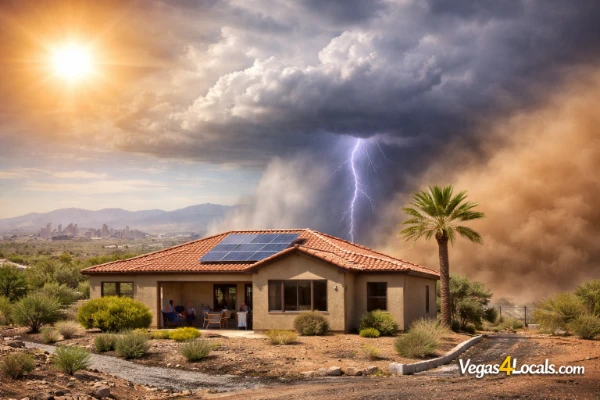
Las Vegas homes face intense heat, strong sun, dust, hard water, high winds, and brief but powerful monsoon storms. This practical guide explains what to inspect, when to do it, and when to call a professional. It covers Las Vegas, Henderson, North Las Vegas, Boulder City, and nearby Clark County communities.
Start with three priorities: service the cooling system before summer, clear drainage paths before monsoon season, and stop leaks or water intrusion as soon as they appear.
Quick links: Seasonal schedule | Heat and cooling | Roof and storms | Water and plumbing | Outdoor systems | Air quality and safety | Warning signs | FAQs
Las Vegas Seasonal Home Maintenance Schedule
Use this schedule to prevent the most common desert-climate failures. Manufacturer instructions, building conditions, and equipment age may require more frequent service.
| When | High-Priority Tasks | Why It Matters |
|---|---|---|
| January–February | Inspect weatherstripping, test smoke and carbon-monoxide alarms, check exposed plumbing, and review the prior year’s repair records. | Cooler weather is a good time for envelope repairs and advance planning. |
| March–May | Schedule HVAC service, replace filters, clear the condenser area, inspect roof surfaces, test irrigation, and repair damaged exterior seals. | Complete heat-related work before contractors become busiest. |
| June | Clear roof drains, scuppers, patio drains, and yard flow paths. Secure outdoor furniture and inspect shade structures, gates, and fences. | Prepare for monsoon rain, wind, and dust. |
| July–September | Monitor AC performance, replace filters as needed, inspect for storm damage, clear debris after storms, and check for irrigation leaks. | Extreme heat and monsoon conditions place the heaviest load on the home. |
| October–November | Inspect the roof after monsoon season, service heating equipment, check the water heater, clean the dryer vent, and inspect exterior caulk. | Fall is the best recovery and repair period before winter. |
| December | Protect exposed pipes during freeze warnings, test holiday electrical loads, clean fireplace systems if used, and update home-inventory photos. | Cold snaps and seasonal electrical use create different risks. |
Tasks to Repeat Throughout the Year
- Check the HVAC filter every month and replace it when dirty or according to system guidance.
- Test smoke and carbon-monoxide alarms monthly.
- Look for plumbing, irrigation, roof, pool, and appliance leaks.
- Keep the AC condenser and other outdoor equipment clear without blocking airflow.
- Inspect the property after high-wind or heavy-rain events.
Control Heat Before It Enters the Home
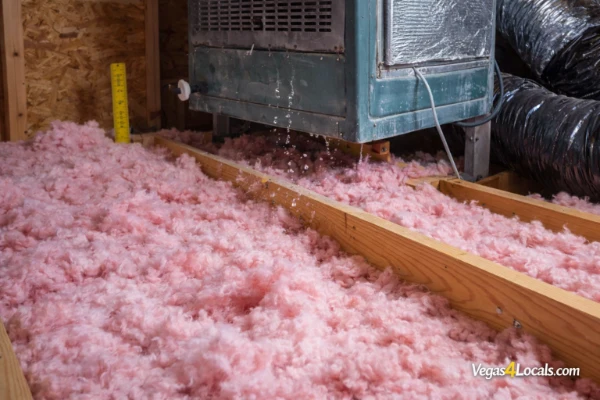
Cooling equipment matters, but the roof, attic, windows, doors, and ducts determine how hard it must work. Start by reducing heat gain and conditioned-air loss.
- Shade west- and south-facing glass: Exterior screens, awnings, shutters, and well-positioned shade can stop heat before it reaches the window.
- Seal air leaks: Inspect door sweeps, weatherstripping, utility penetrations, recessed fixtures, and attic access points.
- Inspect insulation and ducts: Damaged insulation and leaking attic ducts can cause hot rooms and high bills.
- Maintain airflow: Use a filter compatible with the HVAC system. A very restrictive filter can reduce airflow if the system was not designed for it.
- Protect outdoor equipment: Remove weeds and stored items around condensers. Never enclose or shade equipment in a way that traps exhaust heat or blocks service access.
Choosing a Cooling System
Central air conditioning and heat pumps suit many Valley homes. Ductless mini-splits can address additions, garages, or isolated hot rooms. Evaporative cooling works best when outdoor air is dry and becomes less effective during humid monsoon weather.
Whole-house fans can help only when outdoor air is cooler and clean enough to bring inside. They also require adequate attic exhaust, safe window openings, and careful evaluation of combustion appliances. Powered attic fans can pull conditioned air from the home when the ceiling plane is leaky, so obtain system-specific advice before installing one.
Who to call: HVAC contractor, home-energy auditor, insulation and air-sealing contractor, duct specialist, or qualified window-shading installer.
Prepare the Roof and Property for Monsoon Storms
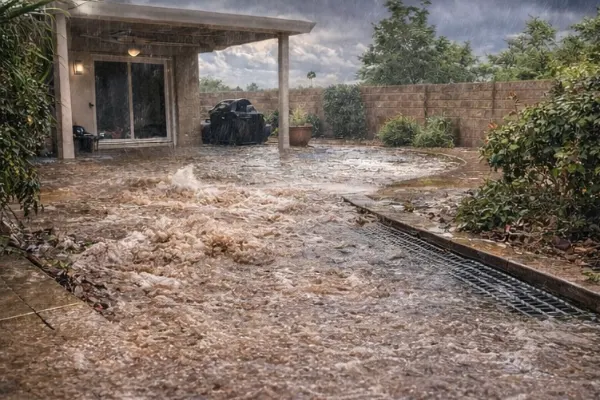
Las Vegas receives little annual rain, but a short storm can overwhelm a blocked drain or send runoff toward a doorway. Inspect the entire route water takes across the property.
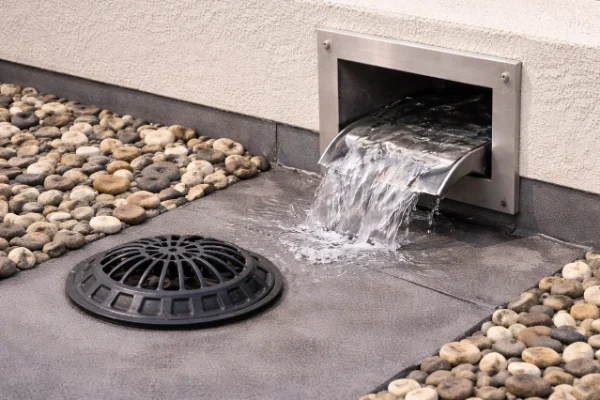
- Clear roof drains, scuppers, gutters, downspouts, patio drains, and yard channels before monsoon season and after storms.
- Keep side-yard flow paths open. Do not store materials where they can block runoff.
- Look for patios, planters, or soil that slope toward the house.
- Inspect thresholds, garage doors, roof penetrations, flashing, parapets, and exterior sealant.
- Secure umbrellas, lightweight furniture, decorations, gates, and loose shade material before strong winds.
Roof-Specific Checks
- Tile roofs: Look for cracked, displaced, or missing tiles. The waterproof underlayment may fail even when the tile still looks serviceable.
- Flat roofs: Keep scuppers and drains open. Persistent ponding, bubbles, cracks, or failed coating requires professional evaluation.
- Shingle roofs: Look for lifted, missing, curled, or damaged shingles and problems around penetrations.
Do not make major grading changes, construct a dry well, or redirect water toward neighboring property without qualified design and any required approvals. Never climb onto a wet, steep, brittle, or heat-damaged roof.
Who to call: Licensed roofer, drainage contractor, qualified landscape or civil-design professional, or hardscape contractor.
Protect Plumbing from Hard Water and Hidden Leaks
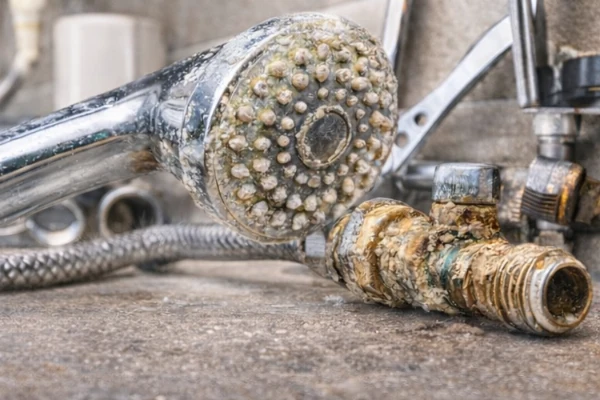
Mineral scale can restrict fixtures and affect water heaters, valves, appliances, and recirculation systems. Leaks can also remain hidden beneath rock landscaping or inside walls.
- Clean faucet aerators and showerheads when flow falls.
- Check toilets, irrigation valves, hose connections, appliance lines, and the water-heater area for leaks.
- Place leak sensors near the water heater, sinks, toilets, washing machine, refrigerator, and other vulnerable fixtures.
- Maintain softeners, filters, and reverse-osmosis systems according to their actual equipment schedules.
- Have an older or heavily scaled water heater assessed before flushing it if regular maintenance history is unknown.
A water softener reduces hardness minerals. Filtration addresses selected contaminants, taste, or sediment depending on the system. Reverse osmosis commonly treats drinking water at one fixture. These products perform different jobs; ask for water-quality data and written performance claims before buying.
Follow the current Southern Nevada seasonal watering restrictions. Inspect drip lines regularly because leaks beneath decorative rock can be difficult to see.
Who to call: Licensed plumber, leak-detection specialist, irrigation professional, or qualified water-treatment provider.
Maintain Pools, Solar Panels and Outdoor Equipment
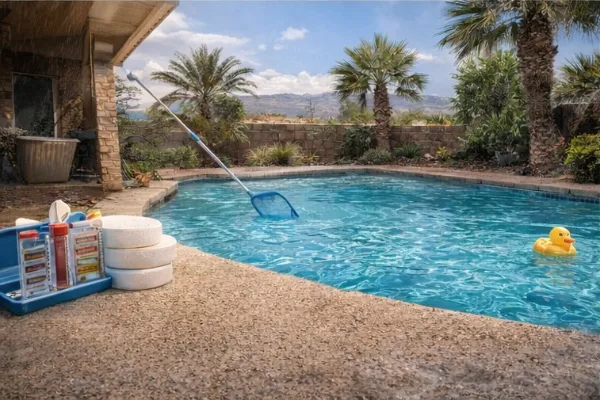
Pools
- Track unusual water loss and check plumbing, equipment pads, autofill devices, and visible surfaces for leaks.
- Maintain proper water chemistry and clean filters according to equipment requirements.
- Shade pumps and controls only when airflow, drainage, electrical clearance, and service access remain adequate.
- Use an appropriate pool cover when practical to reduce evaporation and debris.
Solar and Exterior Equipment
- Review solar-production monitoring for unexplained changes instead of cleaning panels on a fixed calendar.
- Inspect visible wiring, conduit, attachment points, and the roof interface from a safe location.
- Use qualified professionals for roof access, electrical work, panel cleaning, and animal-exclusion systems.
- Inspect patio covers, fences, gates, hoses, seals, and exposed plastics for UV and wind damage.
Who to call: Pool-service or leak-detection company, licensed solar contractor, roofer, electrician, fence contractor, or qualified handyman.
Keep Dust, Pests and Household Hazards Under Control
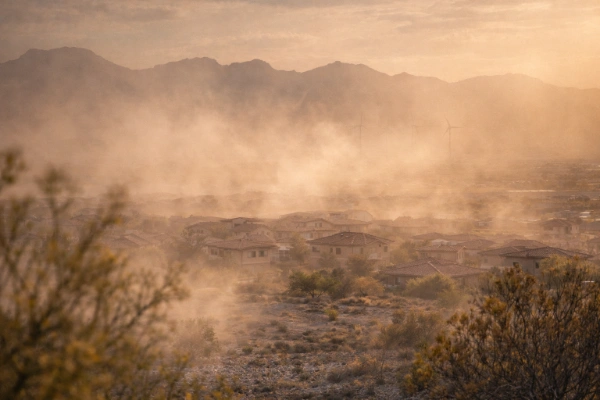
Dust and Indoor Air
- Seal door, window, garage, attic, and utility-entry gaps.
- Use the most effective HVAC filter the system can support without creating airflow problems.
- Consider a correctly sized portable HEPA purifier for bedrooms during dust or smoke events.
- Keep windows and doors closed when outdoor air quality is poor.
Pests
- Seal openings around pipes, vents, doors, screens, and the garage perimeter.
- Remove clutter and dense ground cover from exterior walls.
- Correct leaks and overwatering that attract insects and provide water for pests.
- Use an experienced pest professional for recurring scorpions, rodents, termites, bees, or wildlife.
Fire and Electrical Safety
- Test smoke and carbon-monoxide alarms and replace units at the end of their listed service life.
- Clean the dryer lint screen after every load and have the vent inspected when drying time increases.
- Inspect outdoor receptacle covers, cords, equipment wiring, and seals for heat or UV damage.
- Keep grills and other heat sources away from walls, eaves, fences, dry vegetation, and wind-exposed corners.
- Avoid charging or storing lithium-ion batteries in extreme heat or near combustible materials.
Who to call: HVAC or indoor-air specialist, pest-control or wildlife-exclusion provider, electrician, appliance technician, dryer-vent professional, or fire-safety specialist.
Home Warning Signs That Need Prompt Attention
| Warning Sign | First Action | Who to Call |
|---|---|---|
| AC stops cooling during extreme heat | Check the thermostat, breaker, and filter without opening energized equipment. Move vulnerable people and pets to a safe, cool location. | Licensed HVAC contractor |
| Gas odor or suspected gas leak | Leave the area. Do not operate switches, flames, vehicles, or phones nearby. Call 911 and the gas utility from a safe location. | 911 and gas utility |
| Sparking, hot electrical equipment, smoke, or burning odor | Keep away. Shut off power only if it can be done safely. Call 911 for fire or immediate danger. | 911 and licensed electrician |
| Water entering the home or a sagging wet ceiling | Stay clear of the ceiling and electrical hazards. Stop the water source only when safe. | Plumber, roofer, restoration company, or 911 if collapse is imminent |
| Persistent roof ponding or new ceiling stain | Document it and protect the interior. Do not climb onto a wet roof. | Licensed roofer |
| Rapid pool-water loss or leakage near electrical equipment | Keep people away and shut equipment down only when safe. | Pool leak specialist and licensed electrician |
| HOA approval may be required | Review the governing documents before changing roofs, windows, landscaping, paint, fences, solar equipment, or exterior mechanical systems. | HOA management or board |
Before excavating for irrigation, drainage, trees, fencing, or other improvements, review the Vegas4Locals Call Before You Dig guide and contact 811 as required.
Download the Las Vegas Home Safety Checklist
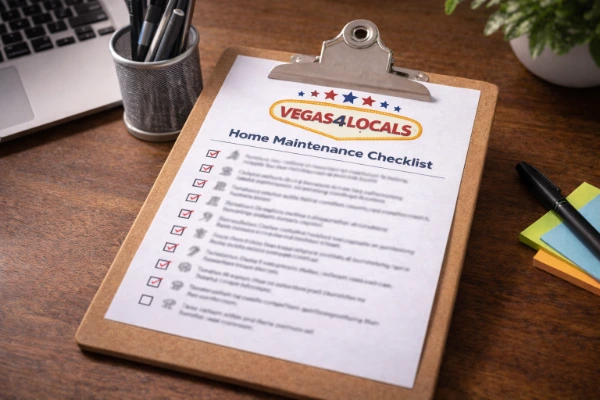
The free two-page checklist covers 25 recurring safety and maintenance tasks for homeowners, renters, HOAs, property managers, and real estate professionals.
Featured Las Vegas-Area Home Services
- HVAC and plumbing: Alaskan Plumbing, Heating & Air
- Water filtration: Environmental Water Systems
- Water-heater service: Classic Water Heaters & Plumbing offer
- Pest control: Skelly Pest Control offer
- Tree and palm maintenance: TreePro
- Chimney and fireplace service: Santa’s Little Helper offer
Featured providers are included as helpful options. Confirm current licensing, insurance, pricing, service areas, and availability before hiring any contractor. Browse more Las Vegas products and services offers.
Las Vegas Home Maintenance FAQs
What should Las Vegas homeowners do before summer?
Schedule HVAC service, replace the filter, clear the outdoor condenser area, inspect attic insulation and ducts, test window shading, and repair air leaks. Complete major cooling repairs before the first prolonged heat wave.
What should I inspect before monsoon season?
Clear roof drains, scuppers, patio drains, and yard flow paths. Check that water moves away from doors and the foundation. Secure outdoor items and inspect the roof, fences, gates, and shade structures.
Is evaporative cooling practical in Las Vegas?
It can work well during dry conditions, but comfort and performance decline as humidity rises. Some households use evaporative cooling in favorable weather and conventional air conditioning during humid or extremely hot periods.
Should every Las Vegas home have a water softener?
No single treatment system is right for every household. A softener reduces hardness scale, while filtration and reverse osmosis serve different purposes. Base the decision on water-quality data, maintenance expectations, plumbing conditions, and the desired result.
How often should an HVAC filter be changed?
Inspect it monthly. Replacement may be needed every one to three months, or sooner during heavy dust, smoke, construction, high occupancy, or continuous system use. Follow the equipment and filter manufacturer’s guidance.
Can renters arrange these repairs themselves?
Renters should promptly document leaks, cooling failures, electrical concerns, and unsafe conditions in writing and contact the landlord or property manager. Do not authorize structural, electrical, plumbing, roof, or HVAC work without permission unless applicable law or an emergency procedure clearly allows it.
Official Las Vegas Valley Homeowner Resources
- Clark County Regional Flood Control District – Flood information and mapping
- FEMA Flood Map Service Center – Official flood-hazard maps
- Southern Nevada Water Authority – Conservation and watering information
- Las Vegas Valley Water District – Water service and local resources
- National Weather Service Las Vegas – Local forecasts, watches, and warnings
- Nevada State Contractors Board – Contractor license verification
Other Useful Links
This guide provides general educational information, not engineering, legal, insurance, medical, or contractor advice. Conditions, codes, equipment, warranties, HOA requirements, and government rules vary. Follow manufacturer instructions and consult qualified professionals for your property.