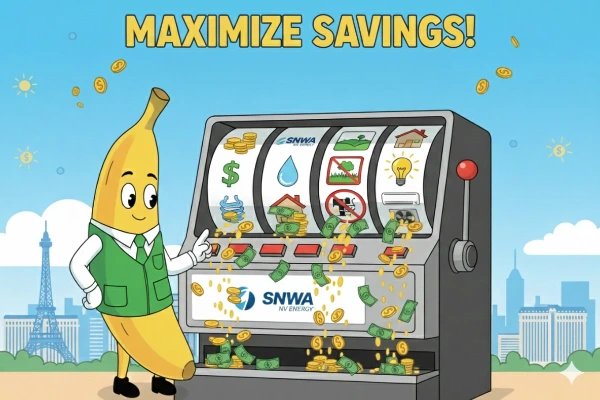
In the extreme, high-heat desert climate of Southern Nevada, proactively managing your home’s energy and water consumption is an absolute financial necessity. To help you protect your household budget, we have compiled all high-value conservation incentives, landscape conversion rebates, and residential utility vouchers from the Southern Nevada Water Authority (SNWA), NV Energy, and federal efficiency programs into a single, comprehensive guide. Pair these financial perks with our practical, no-cost daily saving tips to instantly drop your utility footprint and lower your monthly bills.
Las Vegas Energy & Water Rebates: Maximize Your Savings!
Use our single-source incentive matrix to track down current cash-back opportunities, water smart conversion vouchers, and appliance upgrade programs available across the valley:
Water & Energy Saving Tips for Desert Living
Due to the relentless summer heat cycles in Las Vegas, household utility loads must be aggressively managed to prevent skyrocketing fees. Statistically, over 70% of total residential water consumption across the valley occurs entirely outdoors, while seasonal air conditioning configurations place immense strain on regional electrical power grids. Successfully adapting to this extreme Mojave ecosystem requires a balanced, dual-focus commitment to **conserving both water and energy**. The operational blueprints below outline highly effective strategies to slash your overhead expenses while maintaining a comfortable, eco-responsible home.
Water Conservation Strategies

Because the overwhelming majority of residential water use happens right on your property’s exterior, deploying outdoor water-saving measures delivers the single highest impact on your monthly utility statement. Optimize your irrigation setup with these proven techniques:
Outdoor Irrigation & Xeriscape Management
- Convert Turf to Xeriscape: Eradicate thirsty, high-maintenance grass and replace it with native, drought-tolerant desert landscaping (xeriscaping) that naturally thrives in Southern Nevada’s intense heat. For professional assistance, collaborate with the licensed local experts at Schilling Horticulture Group.
- Enforce Mandatory Seasonal Schedules: Program your irrigation controller to align strictly with your property’s mandatory SNWA watering group assignment. Running sprinklers on unassigned days or on Sundays is illegal and constitutes water waste. Look up your assigned seasonal watering group here.
- Deploy the Cycle-and-Soak Method: Rather than running sprinklers in a single long cycle that triggers immediate soil runoff, split your watering into three shorter, distinct sessions spaced at least one hour apart. To properly maintain grass, run sprinklers for a maximum of 4 minutes per cycle (12 minutes total per assigned day).
- Execute Deep Watering for Trees: Deliver targeted drip irrigation to trees at a depth of roughly one foot below the surface. Ensure the drip line footprint extends out across a 3-foot radius around the tree’s outer canopy drip edge to support healthy root absorption.
- Maintain Tall Turf Heights: If you maintain traditional grass lawns, adjust your mower blades to keep the turf at a uniform height of 3 inches to shade the underlying soil layer and slow evaporation.
- Regulate Irrigation Pressure: Ensure your sprinkler heads are structurally aligned and paired with pressure regulators set to a maximum of 30 PSI (pounds per square inch). High pressure creates a fine water mist that instantly blows away in desert winds.
Indoor Water Conservation Adjustments
Minor adjustments to daily household habits paired with low-flow plumbing fixtures can dramatically lower indoor utility metrics:
- Fix Leaky Fixtures Immediately: Eradicate hidden drips from faucets, showers, and toilets. A slow, steady faucet drip can silently waste hundreds of gallons of treated municipal water over a single billing cycle.
- Optimize Major Appliances: Only activate your automatic dishwasher or clothes washer when you can run a completely full load, optimizing both water and power metrics.
- Turn Off Active Taps: Shut off the running sink faucet completely while brushing your teeth, lathering your hands, or shaving.
- Install High-Efficiency Aerators: Retrofit sinks and showers with low-flow faucet aerators and efficient showerheads. Aerators mix air into the stream to maintain strong pressure while using significantly less water.
Home Energy Saving Steps
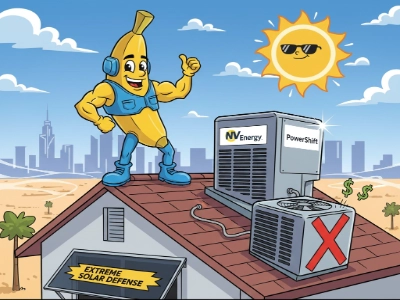
Strategic deployment of your home’s mechanical cooling systems paired with structural solar protection is paramount to staying comfortable while defending your wallet against soaring summer power peaks.
❄️ HVAC System Engineering & Maintenance
- Practice Smart Away Scheduling: Never turn your central air conditioner completely off when heading out to work in the summer. Doing so forces your system to run continuously for hours to cool down baked drywall and furniture upon your return. Instead, adjust the thermostat up to 85°F while away.
- Replace Air Filters Routinely: Swap out your HVAC return filters every single month during peak summer usage, and transition to a 60-to-90-day replacement cadence across the milder winter, spring, and fall cycles.
- Schedule Bi-Annual System Tune-Ups: Coordinate professional HVAC maintenance checkups each spring (prior to air conditioning season) and every fall (before heating cycles launch) to ensure peak mechanical efficiency.
- Request an NV Energy PowerShift Assessment: NV Energy residential customers can unlock a **Free Home Energy Assessment** with an expert PowerShift Energy Advisor. The professional diagnostic visit evaluates your property’s lighting layouts, weather stripping/caulking, and insulation depth while analyzing mechanical heating and cooling performance to generate a custom efficiency report.
Schedule Your Free NV Energy Assessment Online (Or call toll-free at 855-676-9373)
☀️ Defend Your Home Against Solar Heat Gain
Stopping outdoor heat from penetrating your windows is the single most effective way to ease the operational load on your air compressor:
- Install Exterior Shade Screens: Mount heavy solar screens, awnings, or specialized window films on all south and west-facing windows to block harsh afternoon sunlight before it penetrates the glass.
- Protect the A/C Condenser Footprint: Ensure your exterior air conditioning compressor unit is shaded from direct sunlight, but maintain a clear, 2-foot structural perimeter around the unit to guarantee uncompromised airflow.
- Verify Attic Insulation Levels: Ensure your home’s attic is packed with premium insulation rated between R-30 and R-38 to block ceiling heat migration.
- Transition to LED Bulbs: Swap out energy-wasting incandescent light bulbs for cool-burning LEDs. Quality LED bulbs consume up to 75% less electricity and produce virtually zero ambient heat.
No-Cost Energy Habits for Intense Heat Cycles
Adopting mindful household consumption habits will drive down your power bill, especially during seasonal rate fluctuations:
- Set Thermostats to 78°F–80°F: When you are actively home during the summer, lock your cooling system between 78°F and 80°F, utilizing ceiling fans to create a comfortable breeze.
- Shift Large Appliance Use to Off-Peak Hours: Delay running your clothes dryer, baking oven, or automatic dishwasher until off-peak overnight windows (specifically between 11:00 PM and 7:00 AM) when regional power demands and time-of-use rates are lower.
- Eliminate Phantom Power Loads: Unplug secondary phone chargers, television sets, gaming consoles, and desktop electronics when traveling or not in active use. These “vampire appliances” draw continuous standby power.
Commercial & HOA Management Solutions
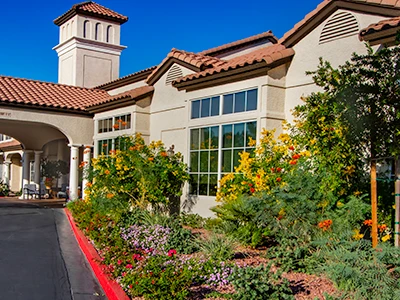
High-volume commercial properties, office complexes, and local Homeowners Associations (HOAs) can secure massive utility reductions by implementing targeted institutional changes:
- Retrofit Corporate Spaces to LEDs: Transition large office parks, parking garages, and community common rooms to integrated LED fixtures to lower direct power overhead and cut replacement labor costs.
- Leverage the Water Smart Landscapes Rebate: Coordinate with your HOA board to submit common-area turf zones to the SNWA cash-back grass conversion program. Replacing structural parkways with xeriscaping saves thousands in community landscape water costs.
- Deploy Advanced Water Technologies: Guide property managers and industrial operators to the **SNWA Water Efficient Technologies (WET)** incentive track to claim high-value rebates on industrial cooling tower adjustments, commercial reverse osmosis units, and smart irrigation controllers.
- Lock Facility Climate Controls: Program and securely lock all corporate thermostats to 78°F during occupied business shifts, and configure automated rollbacks to conserve power during unoccupied weekend or evening windows.
Frequently Asked Questions: Las Vegas Utility Conservation
Q: Can I remove my lawn first and then apply for the SNWA Water Smart Landscapes Rebate?
A: No. You must submit an application and receive a mandatory pre-conversion site inspection from an official SNWA representative before touching your grass. Any turf removed prior to that formal inspection is entirely ineligible for cash-back credits.
Q: How can I tell if my home’s irrigation system needs a dedicated pressure regulator?
A: Activate your system and inspect the sprinkler heads. If you see a fine, cloud-like mist drifting away from the lawn instead of clean, heavy water droplets, your line pressure is too high (surpassing 30 PSI). This causes massive evaporation loss. Installing a pressure regulator valve at your irrigation box will easily correct this.
Q: I rent a residential home in Clark County. Am I allowed to apply for utility rebates?
A: Renters are generally ineligible for major permanent property alteration credits like the grass removal rebate, as the deeded property owner must formally sign off. However, renters are fully eligible to apply for low-cost PowerShift energy solutions, can secure free smart thermostats (with direct landlord permission), and directly pocket 100% of the financial savings on their monthly utility statements.
Q: Will I face a fine if I water my yard during prohibited hours (11:00 AM to 7:00 PM)?
A: Yes. Landscape irrigation via sprinklers between 11:00 AM and 7:00 PM from May 1 through August 31 is strictly prohibited and classified as water waste. Following an initial warning, the SNWA issues progressive, costly fines directly onto your water bill.
Q: My house utilizes an evaporative swamp cooler rather than central A/C. Do I still need to seal air leaks?
A: Absolutely. Evaporative cooling operates by pushing forced, humid air into your property. If your home has structural air leaks around window frames, external doors, or duct junctions, that cooled air rapidly escapes into the desert, forcing your swamp cooler to run constantly and wasting energy.
Q: Are there permanent, year-round water restrictions enforced in Las Vegas?
A: Yes. Beyond the mandatory summer daytime lockouts, it is illegal under regional water-waste ordinances to allow irrigation water to pool or flow into public streets, fail to repair a line leak within 48 hours, or activate sprinklers on an unassigned seasonal day.
Discover More Helpful Local Resource Directories
Keep your household maintenance, regional compliance, and community logistics perfectly optimized across Southern Nevada by visiting our other curated manuals:
- Nevada 811 Call Before You Dig Directory – Stay legally compliant and protect buried utility lines before breaking ground on home upgrades.
- Important Las Vegas Phone Numbers – Keep essential municipal offices, public utility customer lines, and city services close at hand.
- Southern Nevada Recycling Centers Manual – Safely recycle household electronics, dangerous chemicals, plastics, and scrap metals responsibly.
- Las Vegas Telephone & Internet Providers – Compare local residential fiber, cable broadband, and telecom packages for your neighborhood.
- Local Las Vegas Television Stations – Access broadcast networks, emergency valley alerts, and over-the-air digital programming directories.